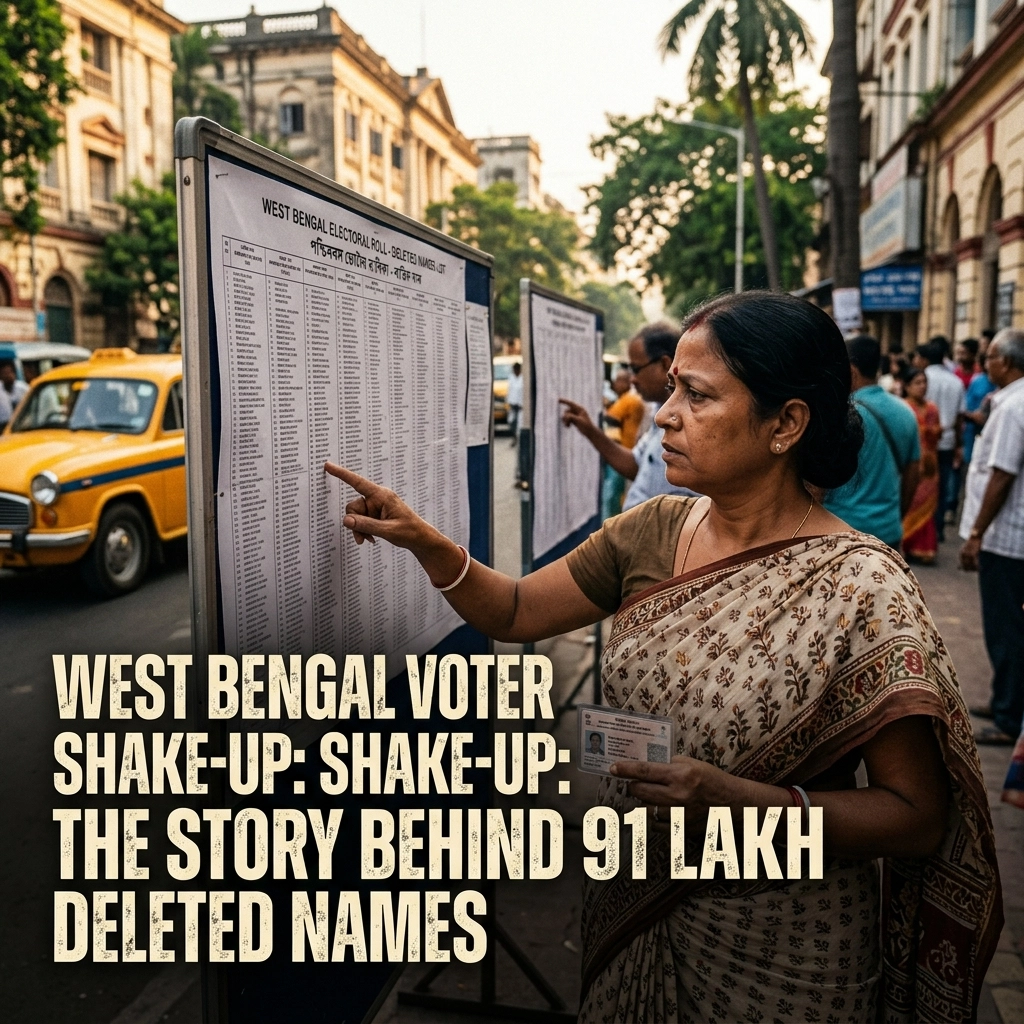
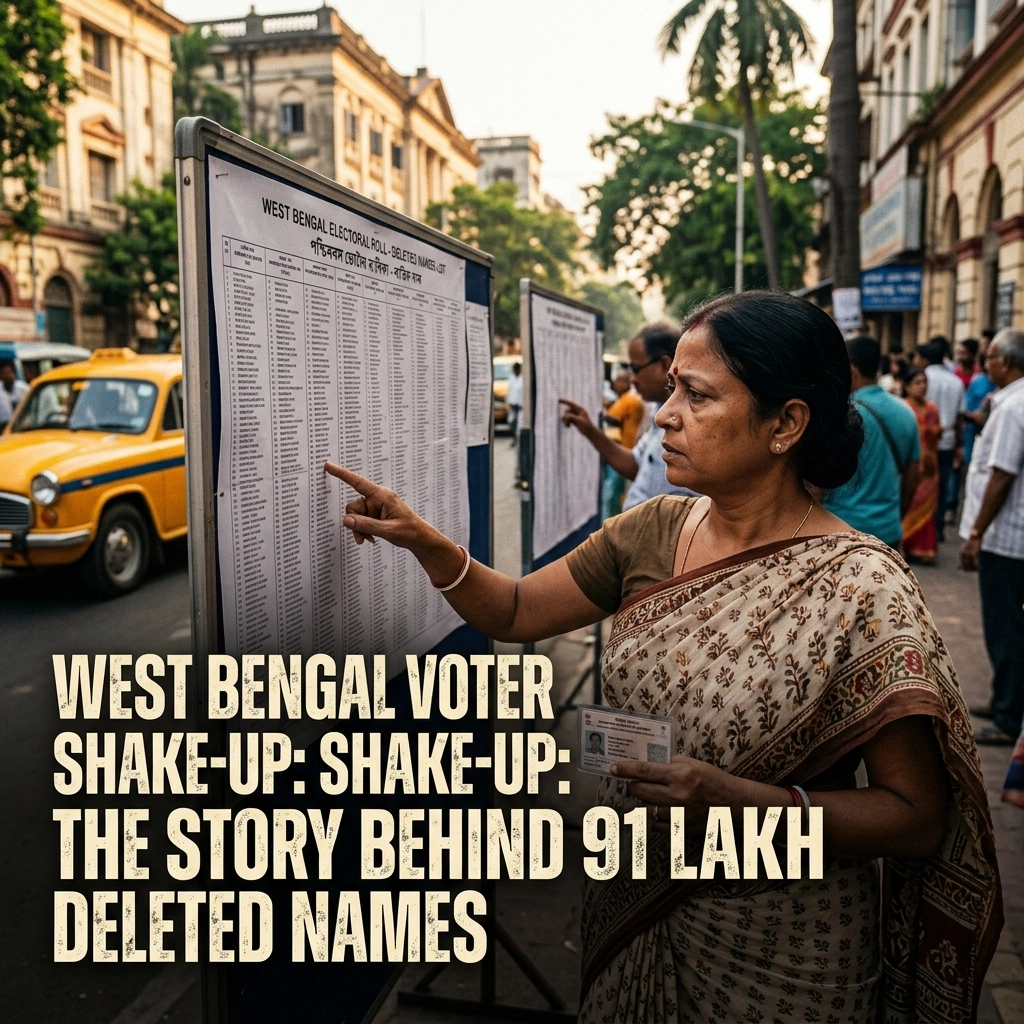
The integrity of the West Bengal Voter Roll has recently become the center of a massive administrative and political conversation. In an unprecedented move aimed at ensuring a "clean" electorate, the Election Commission (EC) has concluded a Special Intensive Revision (SIR) exercise that resulted in the deletion of nearly 91 lakh names from the state’s electoral database. This massive cleanup represents about 8.3% of the total electorate in West Bengal, sparking discussions on electoral transparency, data accuracy, and the future of Indian politics.
For those following news/politics, this isn't just a routine update; it is one of the largest electoral roll revisions in recent Indian history.
Trending: The Numbers Behind the Deletion
The scale of this exercise is staggering. When the SIR process began in November last year, the voter base in West Bengal stood at approximately 7.66 crore. Following the rigorous scrutiny, this number has been slashed to just over 7.04 crore.
Key Statistics at a Glance:
- Total Deletions: ~90.83 lakh names.
- Initial Voter Base: 7.66 crore.
- Current Voter Base: 7.04 crore.
- Percentage Removed: 8.3% of the total electorate.
- "Under Adjudication" Category: 60.06 lakh voters were initially flagged for closer inspection.
This reduction is significant not just for its size, but for the meticulous process involved in identifying these entries. The EC official stated that the revision was carried out in a phased and transparent manner to ensure that no legitimate voter was disenfranchised while removing duplicates, deceased individuals, and those who had shifted residences.

Alt-text: A digital representation of the West Bengal Voter Roll being updated through administrative scrutiny.
Latest: The Special Intensive Revision (SIR) Explained
The Special Intensive Revision (SIR) is a deep-dive audit of the electoral rolls. Unlike the regular annual revisions, an SIR involves door-to-door verification and a multi-layered adjudication process. In West Bengal, the process was triggered by long-standing concerns regarding "ghost voters" and discrepancies in border districts.
The revision was executed in three primary phases:
- Phase One: Initial cleanup where obvious duplicates and deceased voters were removed.
- Phase Two: Identification of "under adjudication" voters: individuals whose residency or identity required further proof.
- The Adjudication Phase: A judicial-led scrutiny that decided the fate of millions of names on the West Bengal Voter Roll.
The goal of the SIR is to bolster electoral integrity, ensuring that every vote cast in the upcoming elections comes from a verified and legitimate citizen.
Popular: The Role of Judicial Officers in Scrutiny
One of the most unique aspects of this revision was the involvement of judicial officers. To maintain complete neutrality and legal accuracy, the Election Commission utilized over 700 judicial officers to adjudicate the 60.06 lakh cases placed in the "under adjudication" category.
According to the Election Commission of India, this judicial oversight was necessary to handle the sheer volume of claims and objections. Out of the 60.06 lakh voters under scrutiny:
- 27.16 lakh voters were deleted after failing to meet the residency or identity requirements during judicial review.
- 32.68 lakh voters were retained and successfully included in the final rolls.
- 22,163 cases are currently disposed of but awaiting final e-signatures to be officially updated.
This level of scrutiny ensures that the West Bengal Voter Roll is as accurate as modern technology and legal oversight allow.

Alt-text: Judicial officers reviewing legal documents for the West Bengal Voter Roll revision.
Regional Impact: Border Districts and the Matua Community
The impact of these deletions has not been uniform across the state. Data suggests that border districts: including Cooch Behar, Uttar Dinajpur, Malda, Murshidabad, Nadia, and North and South 24 Parganas: saw the highest concentration of removals.
Nadia district, in particular, recorded a very high percentage of deletions. This has significant socio-political implications, especially for the Matua community, whose citizenship and voting rights have been a hot-button issue in West Bengal for years. The massive cleanup in these specific areas often relates to "shifted" voters or individuals who could not produce the necessary documentation during the door-to-door verification phase of the SIR.
For more insights into how these changes affect local communities, check out our blog section.
Transparency and Public Accountability
To prevent allegations of bias or administrative overreach, the EC has placed district-wise data in the public domain. "The revision exercise has been carried out in a phased and transparent manner. District-wise data has now been placed in the public domain to ensure complete accountability," a senior EC official noted.
By making this data accessible, the Commission allows political parties, NGOs, and individual citizens to verify the deletions. Any person who feels their name was wrongfully removed still has legal avenues to seek inclusion, provided they follow the established guidelines and directions from competent authorities.

Alt-text: A map of West Bengal highlighting districts with significant changes to the West Bengal Voter Roll.
The Importance of Electoral Integrity
Maintaining a clean voter list is the bedrock of a healthy democracy. When 8.3% of an electorate is removed, it raises questions about how those names were included in the first place, but it also provides hope for a more accurate democratic process moving forward.
Electoral integrity ensures:
- One Voter, One Vote: Eliminating duplicates prevents fraudulent voting.
- Resource Allocation: Accurate rolls help the EC plan for polling stations, security, and staff effectively.
- Public Trust: Transparent revisions build confidence in the final election results.
The massive shake-up of the West Bengal Voter Roll is a step toward aligning the state's electoral data with reality, stripping away the "ghosts" of the past to prepare for a more transparent future…
Looking Ahead: What’s Next for Voters?
As the procedural formalities, such as final e-signatures, wrap up, the EC expects only marginal changes to the current figures. However, for the 7.04 crore voters who remain on the list, the focus now shifts to the actual polling process.
If you are a resident of West Bengal, it is highly recommended that you:
- Check your name on the official NVSP portal.
- Verify your polling station details.
- Ensure your EPIC (Voter ID) card details match the current roll.
The cleanup is done, the data is public, and the stage is set for the next chapter in West Bengal's political story…
More from Coolblogs
- The Rise of Digital Campaigning in India
- How Election Results Impact the Economy
- Travel Guide: Exploring the Border Districts of Bengal
That's all for now! 🗳️
It’s definitely a huge change for the state, isn't it? Seeing 91 lakh names go off the list is a bit of a shocker, but it's all about making sure every vote really counts. We hope this breakdown helped you understand the "why" and the "how" behind the news.
Stay tuned for more updates on what's happening around the country! If you found this helpful, don't forget to share it with your friends who love keeping up with the latest in politics. 🥰
Load More…
Subscribe to our Newsletter…