Smart City Technology is no longer a futuristic concept found only in sci-fi novels; it is the current reality of urban development in 2026. However, as cities across the globe rush to integrate sensors, AI, and IoT devices, many are falling into predictable traps. Integrating Smart City Technology requires more than just buying the latest hardware; it demands a fundamental shift in how we view civic infrastructure and data.
12.5k Views | Updated: April 21, 2026 | Category: Technology
Trending in Urban Innovation
- AI Traffic Grids: New Delhi implements agentic AI to reduce commute times by 20%…
- Digital Twins: London creates a virtual replica of its underground to predict maintenance…
- Privacy First: European cities adopt "Data Sovereignty" laws to protect resident info…
- Sustainable Tech: Solar-integrated pavements are generating power for streetlights in Seoul…

Alt-text: High-tech smart city technology dashboard showing urban data.
The Landscape of Smart City Technology in 2026
The promise of a hyper-connected urban environment is enticing. We envision cities that breathe, react, and support their inhabitants seamlessly. But the gap between vision and execution is widening. According to recent industry reports, over 60% of urban tech projects fail to scale beyond the pilot phase. To understand why, we must look at the common errors being made by planners and developers alike.
Latest News Headlines
- The "Ghost" Sensors: Why 30% of installed city sensors are currently inactive…
- Cybersecurity Breach: Major metropolitan grid hit by ransomware, exposing grid vulnerabilities…
- Budget Overruns: Five cities that spent 200% more than planned on IoT infrastructure…
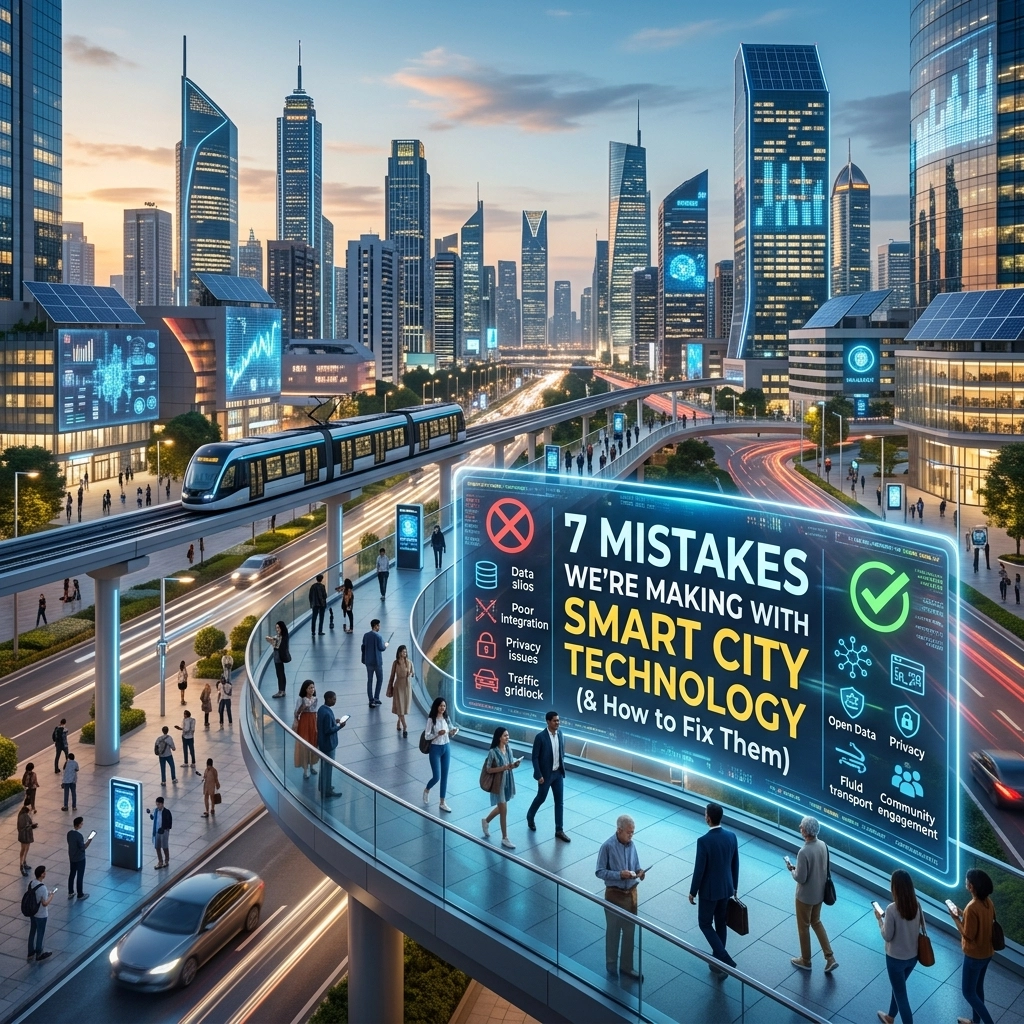
7 Mistakes We’re Making with Smart City Technology
1. Treating It Strictly as a "Tech Program"
One of the most frequent errors is handing the keys of urban planning entirely to IT departments. While technical expertise is vital, Smart City Technology is fundamentally about people, not just servers. When IT leads without multidisciplinary input, the human element: like public safety and transit accessibility: often takes a backseat to "cool" gadgets.
2. Implementation Without a Clear Vision
Many cities suffer from "Shiny Object Syndrome." They install high-tech benches or smart trash cans because they are trending, not because they solve a specific local problem. Operating without a long-term strategy aligned with the city’s broader goals leads to fragmented, useless systems.
3. The "Copy-Paste" Strategy
What works for Singapore might not work for Nashik or New York. Local development strategies must dictate the tech, not the other way around. Replicating external models without considering local human resources, culture, and existing ICT infrastructure is a recipe for failure. Check out our News section for more on localized tech trends.

Alt-text: A modern urban landscape illustrating the integration of Smart City Technology.
4. Neglecting Cybersecurity and Privacy
In the rush to be "smart," security is often an afterthought. Mass surveillance creates significant privacy threats, and vague data ownership rules leave citizens feeling exposed. Without a "Security by Design" approach, cities are essentially building glass houses in a neighborhood of stone-throwers. For more on digital safety, see our guide on Health and Security.
5. Data Hoarding vs. Data Utility
Cities are great at collecting data but terrible at using it. Creating open data portals is a good start, but if the data isn't being leveraged for actual utility services: like real-time water management or emergency response optimization: it’s just digital noise.
6. Building Fragmented, Unscalable Siloes
Proprietary systems are the enemy of progress. When a city buys into a "closed" ecosystem from a single vendor, they risk vendor lock-in. Fragmented ecosystems cannot meet growing demands or support new technologies as they emerge. Scalable Smart City Technology must be built on open standards.
7. Leaving Citizens Behind
The digital divide is real. If the "Smart City" only benefits those with the latest smartphones and high-speed data plans, it isn't smart: it’s exclusionary. Unequal citizen inclusion and predictive policing biases are serious social risks that tech-heavy planning often overlooks.
How to Fix the Smart City Framework
To move forward, we need to shift our mindset from "installation" to "integration." Here is how we fix the current trajectory:
- Elevate Leadership: Move smart city initiatives to the highest level of city governance. It should be a multidisciplinary effort involving urban planners, sociologists, and citizens.
- Focus on Use Cases: Identify clear, local problems first. Whether it’s reducing water waste or improving road safety, the tech should serve the solution.
- Adopt Open Standards: Ensure all IT infrastructure is modular and scalable. This prevents fragmentation and allows for future-proofing.
- Prioritize Privacy: Establish transparent data ownership rules from day one. Residents should know exactly what is being collected and why.
For more insights into how technology is shaping our world, visit our Technology category.
Popular Topics Right Now
- Green Tech: How 2026 is the year of the "Breathable City"…
- EV Infrastructure: The surge in wireless charging stations for buses…
- Urban Farming: Using IoT to manage rooftop gardens in high-rises…
- Agentic AI: The role of autonomous agents in managing city logistics…

Alt-text: Infographic showing the fix for Smart City Technology mistakes.
Why Road Safety is the First Real Test
Does AI really matter for road safety in 2026? Absolutely. While we talk about 7 mistakes, the most visible area of improvement is our streets. By using Smart City Technology to analyze traffic patterns in real-time, cities can prevent accidents before they happen. However, this only works if the sensors are maintained and the data is processed ethically.
If you're interested in the intersection of tech and lifestyle, check out our Travel blogs to see how smart cities are changing the way we vacation!
Load More Articles…
Subscribe to our Newsletter…
That’s all for now! 🥰
I hope this breakdown helps you see the "Smart City" hype through a clearer lens. It's such an exciting time to be watching these urban transformations unfold, but we've got to be careful not to trip over our own cables! Whether you're a tech enthusiast or just someone wondering why there's a new sensor on your street corner, staying informed is the first step.
At Coolblogs, we love diving deep into these topics so you don't have to. If you enjoyed this, definitely check out our About Us page to meet the team behind the screens!
Catch you in the next post! Stay smart! 🚀✨
– Vatsal Shah
Co-Founder, Coolblogs