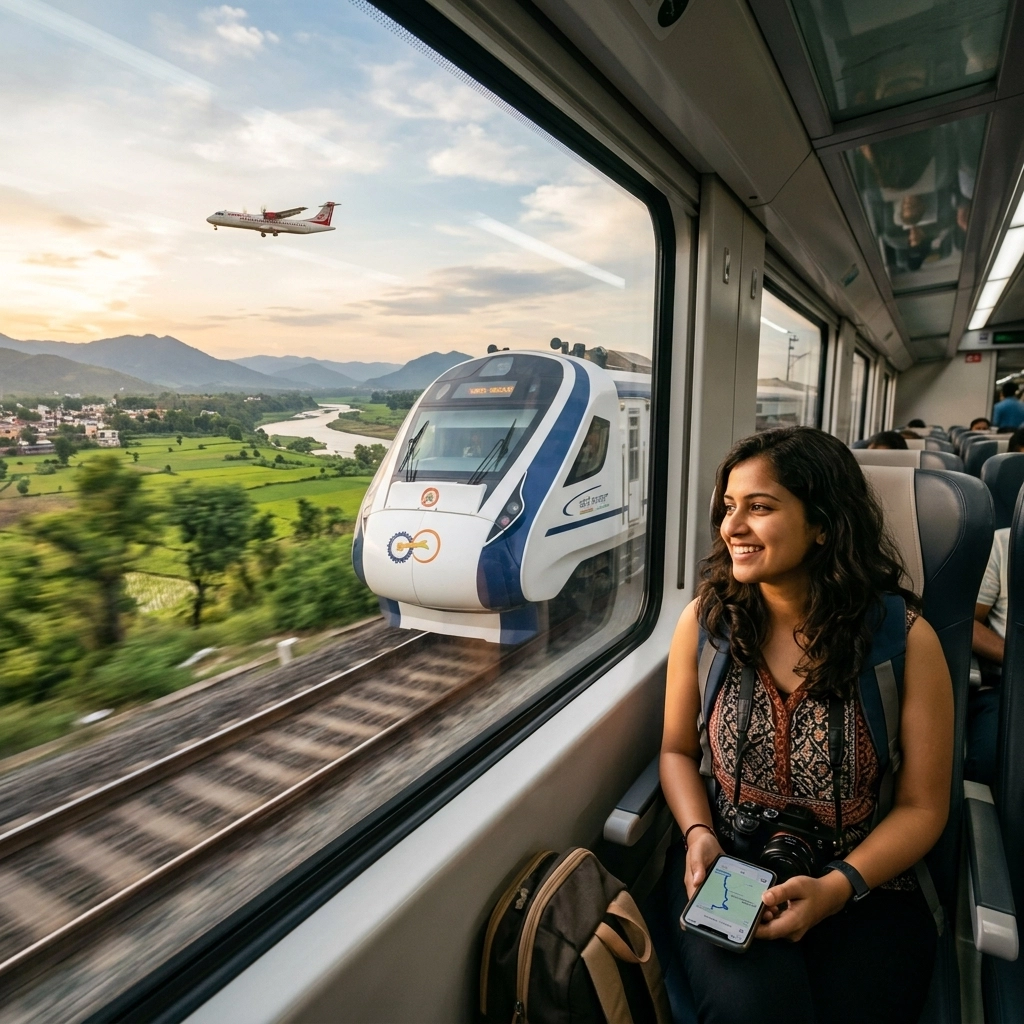
Budget Travel in India has undergone a massive transformation in the last decade. Gone are the days when traveling across the subcontinent meant choosing between a 48-hour grueling train journey or an expensive flight that burned a hole in your pocket. As of April 2026, the landscape of Indian tourism is defined by two words: connectivity and affordability. Thanks to the continued expansion of the UDAN scheme and the operational milestones of High-Speed Rail (HSR) and Vande Bharat corridors, exploring India has never been more accessible for the common citizen.
Whether you are a solo backpacker or a family looking for a quick getaway, understanding how these infrastructure shifts work is the key to mastering Budget Travel in India.
Recent Updates in Connectivity
- UDAN 6.0 Launch: The Ministry of Civil Aviation recently announced the next phase of the "Ude Desh ka Aam Nagrik" (UDAN) scheme, focusing on short-haul helicopter routes in the North East…
- Bullet Train Trials: The Mumbai-Ahmedabad High-Speed Rail corridor has successfully completed its first phase of high-speed technical trials, promising a shift in how business travel is conducted…
- Vande Bharat Expansion: 15 new sleeper-version Vande Bharat trains have been flagged off this month, connecting major overnight hubs like Delhi-Srinagar and Bengaluru-Kochi…
- Fuel Subsidy Extension: To keep airfares stable, the government has extended the RCS (Regional Connectivity Scheme) levy benefits for airlines operating in tier-III cities…

Alt text: Budget Travel in India made easy through regional airport connectivity.
The UDAN Revolution: Flying for the Price of a Taxi
The core philosophy of the UDAN scheme is to democratize the skies. Launched in late 2016, the initiative was built on the promise that a one-hour flight should cost no more than ₹2,500. By 2026, this has become a reality for millions.
How UDAN Makes Travel Affordable
The scheme utilizes a "Viability Gap Funding" (VGF) model. Airlines are given financial support by the government to keep seat prices low on underserved routes. In return, 50% of the seats on these flights are capped at affordable rates. This has opened up destinations like Shimla, Jharsuguda, and Cooch Behar to the average traveler.
- Fixed Fares: For distances between 151–175 km, fares are capped as low as ₹1,420. Even for longer regional hauls of 800+ km, the ceiling is roughly ₹3,500.
- Connectivity: As of this year, over 625 routes are operational, connecting 90+ airports including water aerodromes and heliports.
- Economic Impact: More travelers mean more business for local homestays and guides, making the travel economy more robust in remote areas.
If you are planning a trip, checking for UDAN-specific routes can save you up to 60% compared to traditional trunk routes. For more tips on saving money during your trips, you can check out our section on coupons.
High-Speed Rail: The New Backbone of Indian Transit
While UDAN conquered the skies, the Indian Railways has been reinventing the tracks. The introduction of High-Speed Rail and the ubiquity of Vande Bharat Express trains have redefined Budget Travel in India by offering premium speed at a fraction of the cost of a last-minute flight.
Popular High-Speed Corridors in 2026
- Mumbai-Ahmedabad: The "Bullet Train" corridor is the gold standard, reducing travel time to under 3 hours…
- Delhi-Varanasi: The high-speed link that has turned a spiritual pilgrimage into a comfortable day trip…
- Chennai-Mysuru: A tech-corridor favorite that has seen a 40% increase in weekend tourism…

Alt text: Modern Vande Bharat trains enhancing Budget Travel in India.
The Vande Bharat Sleeper versions are particularly revolutionary. They allow travelers to save on a night’s hotel stay by traveling comfortably overnight, effectively reducing the total cost of the trip. This is a classic move for anyone looking to maximize their budget. You can stay updated on these developments in our news section.
Trending: Top Budget Destinations for 2026
With the new connectivity, several "hidden gems" have become mainstream favorites. Here is what is trending this season:
- Ziro Valley, Arunachal Pradesh: Previously a multi-day trek/drive, now accessible via regional flights to nearby airstrips.
- Hampi, Karnataka: Improved rail connectivity from Bengaluru and Hyderabad makes this UNESCO site a top pick for history buffs.
- Gokarna, Karnataka: The affordable alternative to Goa, now easier to reach thanks to better road-to-rail links.
- Majuli, Assam: The world's largest river island is seeing a surge in eco-tourism due to better ferry and air links in Jorhat.
Latest Travel Tech
- AI Route Optimizers: New apps are helping travelers mix UDAN flights with Vande Bharat trains to find the cheapest "multi-modal" path…
- Digital Rupee Payments: Most regional airports and railway stations now offer exclusive discounts for CBDC transactions…
- Shared Mobility Hubs: Last-mile connectivity at new HSR stations now includes electric bike rentals for under ₹100 a day…

Alt text: Digital navigation tools for Budget Travel in India.
Why This Matters for the Indian Traveler
The synergy between air and rail isn't just about speed; it's about the "Acche Din" of Indian infrastructure. When travel becomes cheaper and faster, the barrier to exploring one’s own country disappears. You no longer need a massive savings account to see the Himalayas or the backwaters of Kerala.
For those interested in how these changes affect the broader economy or even politics, it's clear that infrastructure is the new currency of development. You can read more about this transition in our acche-din feature.
Scannable Travel Tips for 2026
- Book 3 Weeks Early: Even with capped fares, UDAN seats fill up fast.
- Use Regional Hubs: Flying into a smaller airport like Prayagraj can sometimes be cheaper than flying into Delhi.
- Travel Light: Most budget regional carriers have strict baggage limits; stick to a cabin bag to avoid extra fees.
- Check Rail-Air Combo: Sometimes a Vande Bharat to a hub city and a UDAN flight to a remote town is the cheapest route.

Alt text: A traveler using a smartphone to book a budget trip in India.
The Future of Budget Travel in India
Looking ahead, the government's allocation of ₹550 crore for the 2026-27 fiscal year suggests that the expansion won't stop. Plans are already underway to revive another 50 unserved airstrips. Simultaneously, the "RapidX" or RRTS (Regional Rapid Transit System) is blurring the lines between city commuting and inter-city travel.
As connectivity improves, the cost of technology and logistics drops, leading to more affordable tour packages. We are moving toward an era where "Budget Travel" doesn't mean "Low Quality Travel." It means smart, efficient, and fast travel.
Recent News Bites
- New Heliport in Kedarnath: Specifically designed for pilgrims, reducing the trek time to 15 minutes…
- Solar Powered Stations: 500+ railway stations now run entirely on green energy, reducing operational costs…
- Tourism Subsidy for Students: A new scheme allows students to claim 20% cashback on UDAN tickets…
For more lifestyle and travel hacks, don't forget to visit our home page or explore our about-us section to see how we track these trends.
That’s all for now! India is opening up in ways we never imagined. So, pack your bags, take advantage of these new routes, and go explore this beautiful country without breaking the bank. Happy journeying! 🥰
Load More…
Subscribe for Latest Updates!

Alt text: A scenic view of an Indian landscape reachable via new rail routes.
Note: For official fare charts and route maps, please visit the Ministry of Civil Aviation website or the Indian Railways portal.